Opening hours and location
Opening times, public holidays, address, directions or which documents to bring.

Digitup Studio is a technical studio in Madrid that designs and builds AI voice agents: a virtual receptionist that answers the phone, resolves frequent questions, manages appointments, takes details and hands the call to a person when needed.
Definition
An AI voice agent is software that answers phone calls in natural language: it listens, understands the request, looks up what it needs and replies with a synthetic voice. It is also called a virtual receptionist, AI phone assistant or smart answering service. Unlike a voicemail box, it resolves what it can and leaves the rest ready for your team.
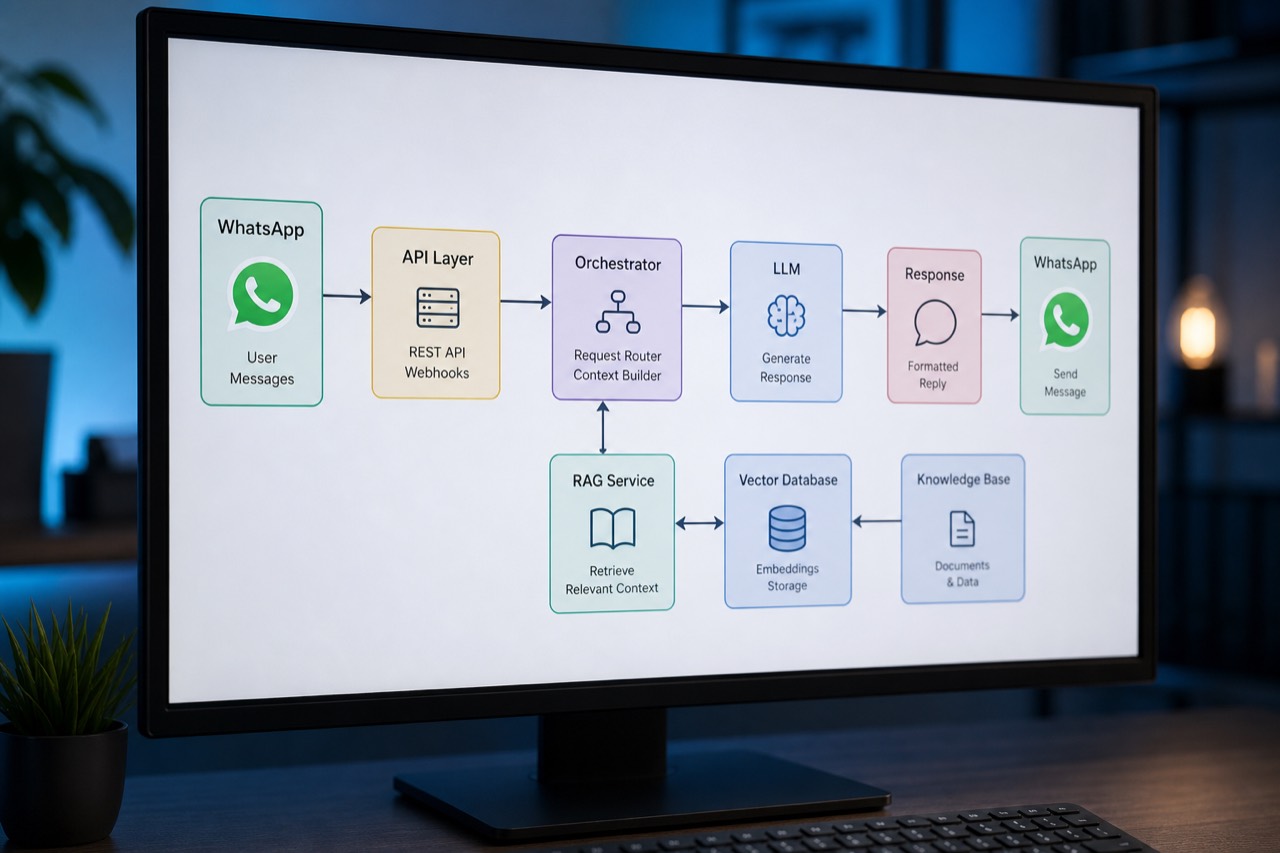
It has three parts: telephony, which receives the call; an AI model, which transcribes, decides and replies by speaking (a real-time voice model, or a chain of speech recognition, language model and speech synthesis); and the integrations with your calendar, your CRM or your knowledge base. If your customers prefer to write, there is the WhatsApp AI chatbot; if it must act across several systems, it is an AI agent with a voice.
Calls
The ones that repeat every day and don't need a professional's judgment.
Opening times, public holidays, address, directions or which documents to bring.
Services, terms and published prices that you validate.
Book, change or cancel according to the calendar's real availability.
Name, phone, reason or case number, saved in your CRM.
To the right extension, with a summary of the conversation.
When nobody is there or the lines are busy.
Integrations
In three layers: the line, with a programmable telephony provider such as Twilio or Telnyx; your tools, through APIs; and your team, with transfers and alerts. Anton Zverev, CTO of Digitup Studio, has spent more than 10 years building products and systems connected to services such as OpenAI, Gemini, Twilio or Telnyx.
With a PBX phone system, the agent transfers to an extension; how this is done depends on the model and the carrier. Appointments are booked in Google Workspace or Microsoft 365 calendars, or in your management software if it has an API. It answers from a knowledge base you control, with RAG if there are many documents, as in our automation and AI integration projects.

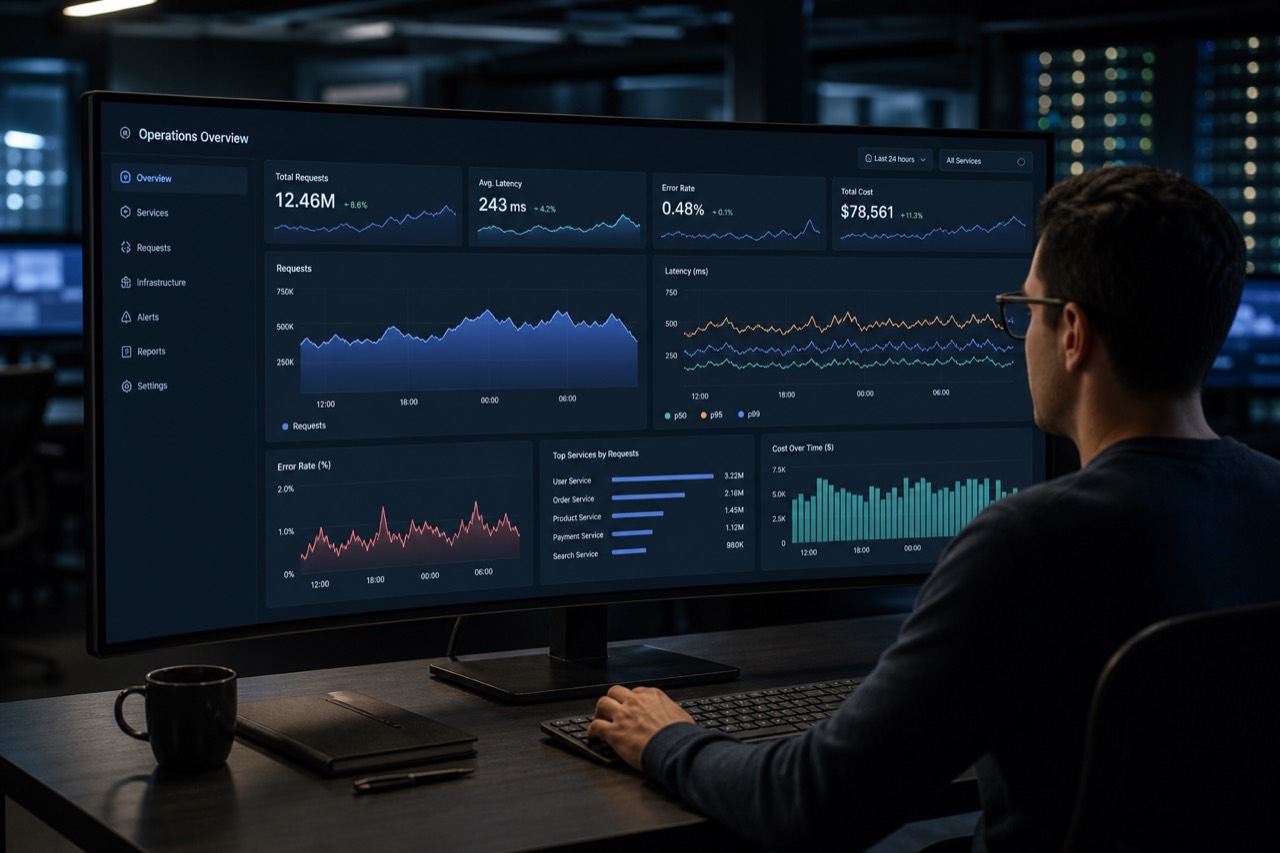
A summary, the reason for the call, the data collected and, if you decide so, the transcript. Your team reviews it in a dashboard or in the CRM and sees which questions the agent can't answer yet.
Handover
It hands the call to a person, takes a message or schedules a call back. It must not improvise answers that are not in its sources.
We agree with you when it hands over: if the caller asks for it, if it is urgent, if professional judgment is needed or if it doesn't understand after two attempts. Whoever picks up receives a summary and, if nobody can, a task is left in your CRM. The AI prepares; the person decides.
Transparency
Yes. Article 50 of the EU Artificial Intelligence Act (Regulation (EU) 2024/1689) requires that people know they are interacting with an AI, unless it is obvious, and that they are told at the latest at the first interaction. It applies from 2 August 2026, so the agent says it in its first sentence.
The call also processes personal data. Article 13 of the GDPR requires telling people, when the data is collected, who the controller is, what it is used for and on what legal basis, among other points; Article 11 of Spain's Organic Law 3/2018 allows doing this in layers. If you record or transcribe, the opening announcement must say so.
At a clinic, health data is a special category (Article 9 of the GDPR): the agent asks only for what the appointment needs. This is general information, not legal advice; the announcement and the privacy policy are validated by your adviser or your data protection officer.
Sectors
Where the phone is the main channel and calls look alike. We don't yet have a public voice-agent case in these sectors.
Reception overloaded?
A smart answering service for clinics: appointments, changes and opening hours. Anything clinical goes to a person, always.
See clinicsIncidents at all hours?
Collects the incident and the resident's contact; anything urgent goes to the person on call.
See property managersCalls from listings going unanswered?
Answers about published properties, collects what the enquirer is looking for and proposes a viewing.
See real estateFirst calls that interrupt?
Takes details and the area of the matter, detects urgent deadlines and books the consultation. It never gives advice.
See law firmsComparison
The answering machine takes messages, the phone menu routes calls and the voice agent resolves the repetitive ones.
| Aspect | Traditional answering machine | Phone menu (IVR) | AI voice agent |
|---|---|---|---|
| How it answers | Recorded message and voicemail. | Options by keypad or by voice. | Conversation in natural language. |
| Frequent questions | It doesn't answer them. | Recorded messages per option. | Answers with approved information. |
| Appointments and details | A message to listen to later. | Passes the call to a person. | Checks the calendar and records the details in your CRM. |
| Handover to a person | Your team calls back. | Through a menu option. | By rules, with a summary of the conversation. |
| Cost of use | Low and fixed. | Depends on the phone-system provider. | Telephony and AI model, by minutes. |
| Main risk | Missed calls and unreturned messages. | Long menus that people abandon. | Errors if its sources and rules are not limited. |
General comparison; each phone system depends on its provider.
Cost
Digitup Studio projects start at €1,000, plus two usage costs that depend on call volume: telephony and the AI model.
Development includes script, rules, knowledge base, integrations and testing; integrating a calendar, CRM or phone system raises the price. Telephony is paid to the provider at its rate, and the model is paid by usage.
You can pay as a fixed-price project, over 6 or 12 months, or with Build & Run, a monthly fee with agreed usage limits. More in ways of working.
Process
With a prototype that you test with real calls before connecting it to your number. Delivery from 2 weeks.
Which calls you receive, how many are lost and which ones don't need a person. If it isn't worth it, we tell you.
What it tells callers, what details it asks for, when it hands over, how it says it is an AI and what is stored.
Your team calls a test number; we measure answers, times and cost per call.
Appointments, call logging and transfers, with permissions limited to what is necessary.
First out of hours or unanswered calls; then we expand and run maintenance in production.
Fit
It fits with volume and repetition; not when every call needs professional judgment.
If in doubt, an AI audit sets priorities before building.
There is no public case of a telephone voice agent yet. The closest is Mallorcab, a taxi platform in Mallorca developed by Digitup, with AI for a virtual call center, translations and support.
Yes, in its first sentence and before asking for any data. Article 50 of the EU Artificial Intelligence Act (Regulation (EU) 2024/1689), applicable from 2 August 2026, requires people to be told that they are interacting with an AI system, unless it is obvious, at the latest at the first interaction. The same opening announcement also says whether the call is recorded.
Yes. The usual setup is to keep your number and divert to the agent all calls, only those out of hours, or only those nobody answers, as far as your carrier allows. The agent runs on a line from a programmable telephony provider, such as Twilio or Telnyx. If you prefer not to touch your line, you can start with a new number for one specific service.
The agent transfers the call to the extension or phone you define and leaves a summary of the conversation, so nobody has to repeat their case. The handover rules are agreed before going live: an explicit request, urgency or topics that need professional judgment. If nobody is available, it takes the message with the reason and phone number and creates a task in your CRM.
Yes, if your calendar can check availability and book through an API, like Google Workspace or Microsoft 365 calendars, or your management software if it has that option. The agent offers free slots, confirms day and time with the caller and can change or cancel appointments. If your calendar has no API, it records the request with the necessary details and reception confirms it afterwards.
Only if you decide so: you can store the audio, the transcript or just a summary. In any case the call processes personal data, and Article 13 of the GDPR requires telling people, when it is collected, who the controller is and what it is used for; if you record or transcribe, the opening announcement must say so. This is general information: your adviser validates the announcement.
Digitup Studio projects start at €1,000. An agent that provides information and takes messages is closer to that minimum; integrating it with a calendar, CRM or phone system raises the price. Two usage costs are paid separately according to call minutes: telephony, which the provider bills, and the AI model. We estimate them with your real call volume.
Delivery starts from 2 weeks for a well-scoped case; integrations with a calendar, CRM or phone system may need more phases. Before connecting it to your number, your team tests a prototype with real calls on a test number. We adjust script and rules with what we learn and launch in stages, starting with out-of-hours calls.
Current voice models understand and speak several languages, so the agent can answer in more than one. We define with you which ones, normally Spanish and the languages your customers use most, and we test each language with real calls before activating it, because the quality of recognition and voice changes by language and model. In all of them it uses the approved information.

Tell us which calls you receive and which ones get lost today. We will tell you how we would approach it and also whether we think it isn't worth doing.